"Principle of equality among Humans: two same Humans, two same Rights"
Aequalitas (Principle of Equality among Humans) :

Having established the Right to be of the Human destined to be, the question then arises regarding the implications of this newly identified legal data.
This part is about parallelism: from one case to another, from one Human to another:
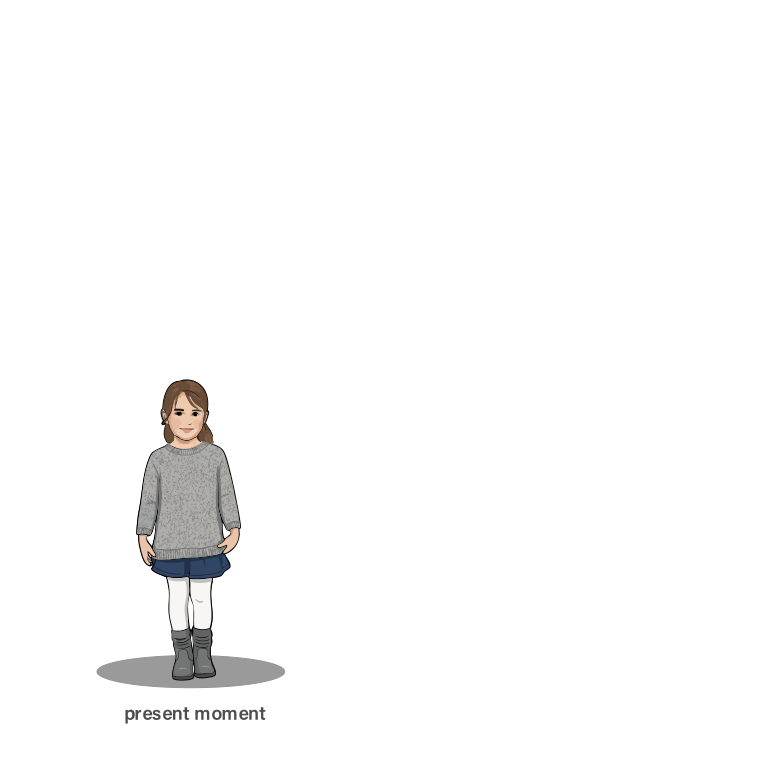
I recognise the Right to be here tomorrow of the one she is destined to be > I recognise the Right to be here tomorrow of the one the embryo is destined to be.

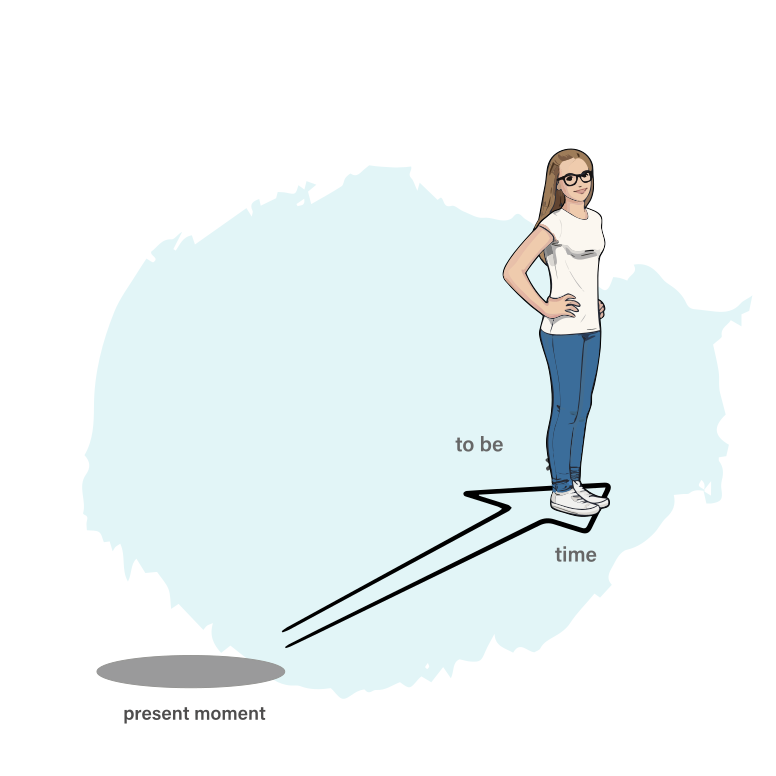
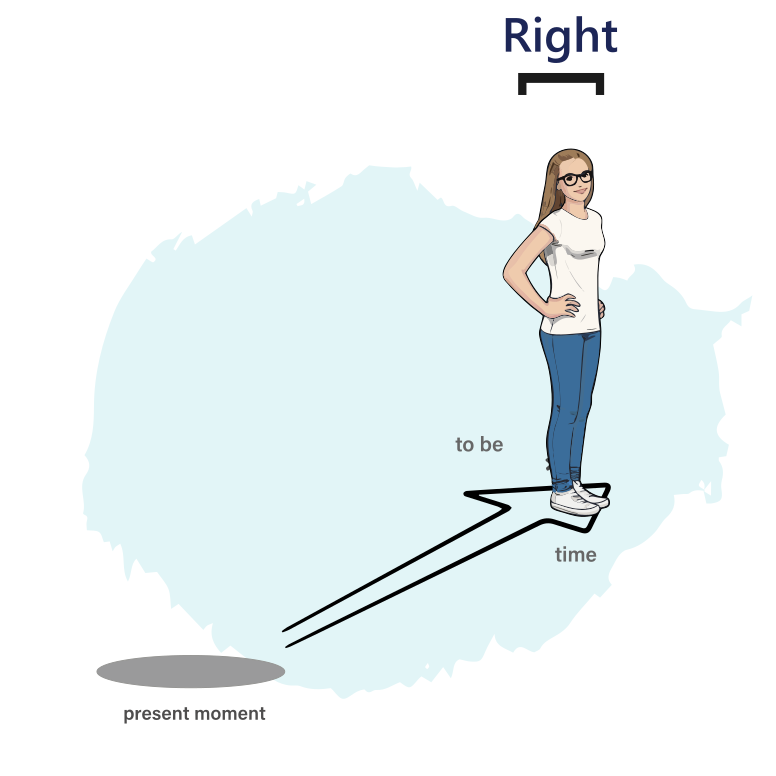
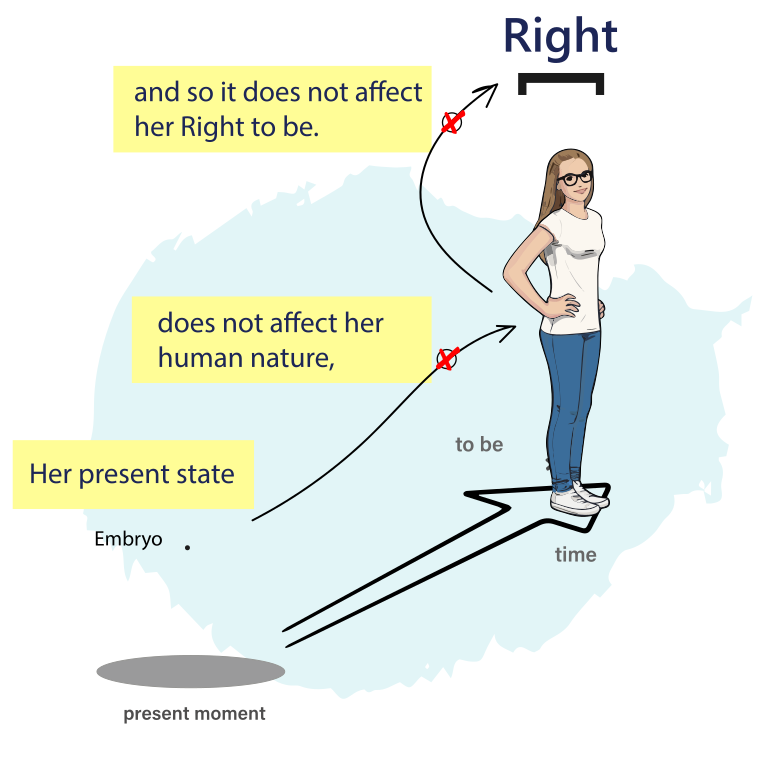
The Human to come is a Human independently of what he or she is today > the human to come deserves protection independently of what he or she is today.
- But I see that you're thinking.
- Well...the idea of a Right to be respected in the case of an embryo is quite difficult to accept. And I wonder if it’s possible to counter this with an argument.
- Which argument?
- Couldn’t we think that the One this little girl is destined to become has an inherent Right to exist, because she is already someone today — whereas the other does not, precisely because she is still today only an embryo?
- The Rights of a person are inherent to human nature. Humans should be protected simply because they are human. Am I right?
- Surely!
- And, is the young woman that an embryo is destined to become any less human than the young woman this little girl is destined to become, because she is only an embryo today?
- Surely not!
- So, why then should this one be considered and protected, and not the other? Why should one be granted a Right and not the other? Does it make sense?
- Indeed. It does not.
- You have just invalidated the hypothesis that seeks to make the Right of the Human to come depend on what he or she is today.
- That's true. It is not an extraneous element to one's human nature that should determine the recognition of one's Rights; therefore, it is not what the Human to come may be at a given moment that should determine whether this Human has the Right to exist.
I Want her to be here tomorrow >
I recognise the Right of the one the embryo is destined to become to exist.
"We all Want others to continue to exist tomorrow; thus, no one can deny the existence of a Right to be respected in the case of the embryo"
« TODAY, I WANT TO PROTECT (moment of legal recognition)...

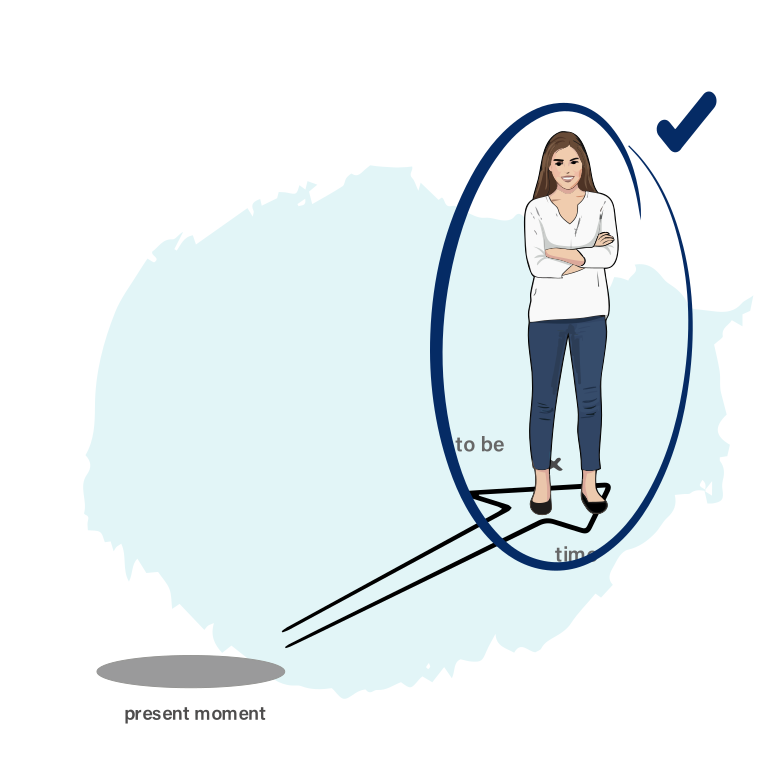
...HER PRESENCE TOMORROW ! (suject of legal recognition) »
=
(means)

« TODAY, I WANT TO PROTECT (moment of legal recognition)...
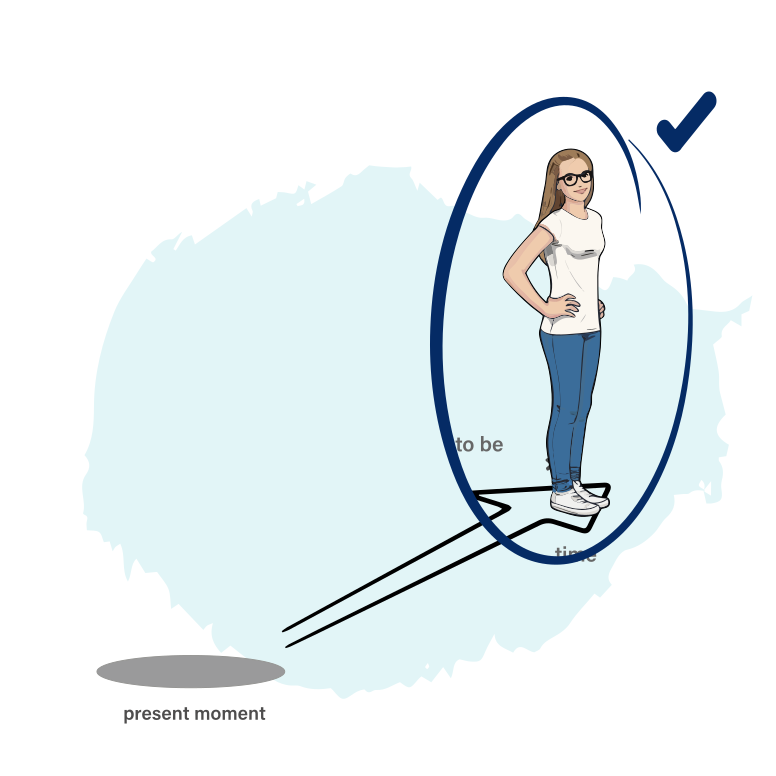
...HER PRESENCE TOMORROW ! (suject of legal recognition) »
Principle of equality among Humans:
Two Humans of the same nature: one shared Will, two equal Rights.
"The 'you' I Wish today to protect is not limited to the person you are today, but also extends to the person you are destined to be in the future.
Therefore, I must not consider the embryo in terms of what it is today, but rather with a view that extends toward its future.
And, I cannot deny that, in the future, the embryo is the same person as the 'you' I Wish to protect".
It has just been proven that the Human the embryo is destined to become possesses a Right to be/ to exist. Such a legal datum radically alters the manner in which each individual adjudicates on the matter of the embryo. Indeed, at present, no one considers the person the embryo is destined to become (IIIA). No one has yet understood that the embryo must be considered only in light of the person it is destined to become (IIIB).